The focus meter: GTA's version of Dead Eye
Official. Both protagonists have a slow-motion targeting ability, shown in the Extended Look as a coloured bar in the HUD that drains while the ability is active. Trigger it during a firefight and time slows down, giving you room to place shots that would be impossible at normal speed.
Mechanically this is the closest thing GTA has had to Red Dead Redemption 2's Dead Eye, and it is also a direct descendant of Michael De Santa's slow-motion ability in GTA 5 — except now it belongs to both leads rather than one, and it does considerably more than slow the clock. Rockstar has not published an official name for the system, so treat "focus meter" as the community's working label, not a confirmed term.
The presentation also leaned into Max Payne 3-style cinematic kill shots at the end of encounters, which is a stylistic choice more than a mechanic but tells you what tone Rockstar is going for: combat that is deliberate and messy rather than the arcade-fast lock-on shooting of earlier GTAs.
Lethal and non-lethal target zones
Official. This is the part that actually changes decisions. While the slow-motion ability is active, the game paints target zones onto enemies in two colours:
| Highlight | Where it appears | What it does |
|---|---|---|
| Red | Head, heart | Kills the target outright |
| Yellow | Joints and extremities — hands, knees | Incapacitates or disarms without killing |
Shooting an enemy's raised handgun knocks the weapon out of their grip. Shooting a knee drops them. That means non-lethal play is a supported option rather than something you improvise by aiming badly — a meaningful shift for a series where the only real answer to an armed NPC has always been to kill them.
The highlighting is not limited to people either. Vehicles and parts of the environment get flagged too, which is what makes the police-chase footage work: you can pick out a pursuing car's radiator or a tire and disable the vehicle instead of shooting the officer driving it. That connects directly to the reworked wanted level system, where killing police escalates your situation far faster than escaping does.
Weapon handling and the wheel question
Official. Several handling details showed up clearly in the footage:
- Fast swapping. Players switch between two carried firearms on the fly without opening the weapon wheel at all.
- Picking up enemy weapons. Jason equips a fallen enemy's assault rifle mid-fight in a single smooth animation, rather than stopping to loot.
- One-handed weapons. Lucia fires a shotgun one-handed while her other arm is occupied carrying a bag — so what you are hauling affects how you fight.
- A wheel with tabs. The weapon wheel returns with dedicated slots including unarmed and binoculars, plus a separate tab for items and gear such as masks and sunglasses, in the manner of Red Dead Redemption 2's split wheels.
What the footage does support is the weaker version of that claim: the wheel is organised rather than bottomless, and there is now a distinction between weapons and other gear. Whether a hard carry limit exists is a separate question Rockstar has not answered.
Cover, melee, and getting knocked down
Official. Cover is visibly rebuilt. Animations distinguish between different heights of cover, characters settle into objects contextually rather than snapping to a generic pose, and transitions from one piece of cover to another are continuous. GTA 5's cover system was serviceable and sticky; this looks closer to Red Dead Redemption 2's weight and follow-through.
NPC damage got the same treatment. Enemies take hits without immediately dying, with more elaborate ragdoll and injury reactions than GTA 5 — which is the necessary other half of a system that lets you disarm and incapacitate people. If everyone died in one shot, yellow target zones would be pointless.
Knockdowns have their own layer. When a protagonist is put on the ground, a contextual escape prompt appears, and the struggle animation varies with the situation — anything from a back-and-forth grapple to kicking an attacker away. Melee remains the least-shown part of the combat picture. A brutal close-quarters kill appears in the presentation, but it is not clear whether that is systemic melee or a scripted story beat, so we are not counting it as a confirmed mechanic.
The animation budget behind all of this is the one hard number Rockstar has given: the game contains well over 600,000 animations, against roughly 55,000 in GTA 5 and roughly 300,000 in Red Dead Redemption 2.
In-car combat and police pursuits
Official. The presentation's longest action sequence is a police chase, and it is the best single demonstration of how the combat and driving systems interlock:
- Shooting from moving vehicles is a core part of the chase rather than a side option, including firing upward at a police helicopter.
- Tire shots work. Hit a pursuing police car's tire and it loses control and overturns, with the crash carrying real environmental damage rather than a canned spin-out.
- First-person driving features prominently during the pursuit.
- Character switching works mid-chase. The footage shows Lucia driving while the player swaps to Jason to lean out and shoot — the two-protagonist structure turned into a combat mechanic. Our Jason and Lucia profile covers how the pairing works elsewhere in the game.
- Fire spreads. A Molotov thrown at a vehicle ignites it and the flames propagate rather than playing a fixed burn animation.
Police behaviour during and after a chase is its own system: officers actively search an area when you break line of sight, then disengage if they cannot find you. Combined with the description-based identification described in the wanted level explainer, that makes hiding a real tactic rather than a countdown you wait out.
Carjacking is a mini-system now
Official. Vehicle theft is no longer one button on every parked car. Cars have locks, alarms, and trackers, and breaking into one can involve using a tool — a hammer appears in the footage. An in-game phone app called WAINK surfaces a vehicle's value, the cost of registering it as a personal vehicle, and whether it is locked, alarmed, or tracked, so you can size up a target before committing.
That matters for combat because the car you are in is part of how police identify you. Stealing a tracked vehicle mid-escape is now a way to make your situation worse, not better.
Why the morality track changes how you fight
Official. Running alongside the wanted meter is a separate persistent morality track, shown with angel and devil icons that register your actions over time. Rockstar has indicated that violence a mission genuinely requires is not held against you, which reads as a measure of restraint rather than a blanket penalty for committing crimes.
Put that next to the yellow non-lethal target zones and a design intent emerges: the game gives you tools to resolve encounters without killing, then keeps a record of whether you used them. Rockstar has not detailed what the morality track actually affects — reputation, NPC reactions, story outcomes, or something else — so we are not going to guess at the consequences.
What is still unconfirmed
Being precise about the gaps matters as much as listing the reveals:
- The focus ability's official name, cost, and recharge. We know a meter drains. We do not know how it refills or whether it is upgradeable.
- A hard weapon carry limit. Reported widely, stated by nobody at Rockstar.
- Whether melee is a developed system. One brutal kill in a presentation is not a combat system.
- Full weapon roster. Individual guns were visible in footage, but Rockstar has not published a weapons list. Anything presenting itself as a complete GTA 6 arsenal right now is assembling it from footage-watching, not from an official source.
- Difficulty and aim-assist options. Not addressed.
For the broader picture of which mechanics are confirmed versus circulating unverified, see our confirmed vs leaked features breakdown, and the full Extended Look summary for everything outside combat. With under three months to launch, expect Rockstar to fill some of these gaps before November 19.
Frequently asked questions
- Does GTA 6 have Dead Eye?
- Not under that name, but functionally yes. The Extended Look showed both Jason and Lucia using a slow-motion aiming ability driven by a meter in the HUD. While it is active, time slows and the game highlights target zones on enemies. Rockstar has not published an official name for it, so "focus" is the community's working term rather than a confirmed label.
- What do the red and yellow highlights mean in GTA 6 combat?
- They separate lethal from non-lethal hits while the slow-motion ability is active. Red zones — the head and heart — are instant kills. Yellow zones sit around the joints and extremities, such as hands and knees, and incapacitate or disarm an enemy instead of killing them. Shooting a raised handgun knocks the weapon out of an enemy's grip.
- Can you carry unlimited weapons in GTA 6?
- Unconfirmed. The Extended Look showed a weapon wheel with a separate tab for items and gear, and it showed fast swapping between two carried firearms without opening the wheel at all. A widely repeated claim that you can only carry two rifles and two pistols with the rest stored in a vehicle trunk has not been stated by Rockstar and should be treated as unconfirmed.
- Is there in-car combat in GTA 6?
- Yes. The presentation showed extended police pursuits with shooting from moving vehicles, including firing at a helicopter and shooting out police car tires to send pursuers into a spin. Character switching works mid-chase, so one protagonist can drive while the other leans out and fires.
- Is stealing a car still one button in GTA 6?
- No. Vehicles have locks, alarms, and trackers, and breaking into one can involve using a tool. An in-game phone app called WAINK shows a car's value, what it costs to register as a personal vehicle, and whether it is locked, alarmed, or tracked before you commit.
Source note: Everything labeled Official is drawn from Rockstar's own Grand Theft Auto VI: An Extended Look presentation, published August 27, 2026 on Netflix and then free on Rockstar's YouTube channel and the official Grand Theft Auto VI site, plus Rockstar Newswire material published alongside it. Detail-level observations of the footage were cross-checked against breakdowns from Engadget, GamingBolt, and Notebookcheck. The weapon carry-limit claim is labeled unconfirmed because it does not trace back to a Rockstar statement. We do not link to leaked or stolen material — see our rumor policy.
More in Guides & Breakdowns
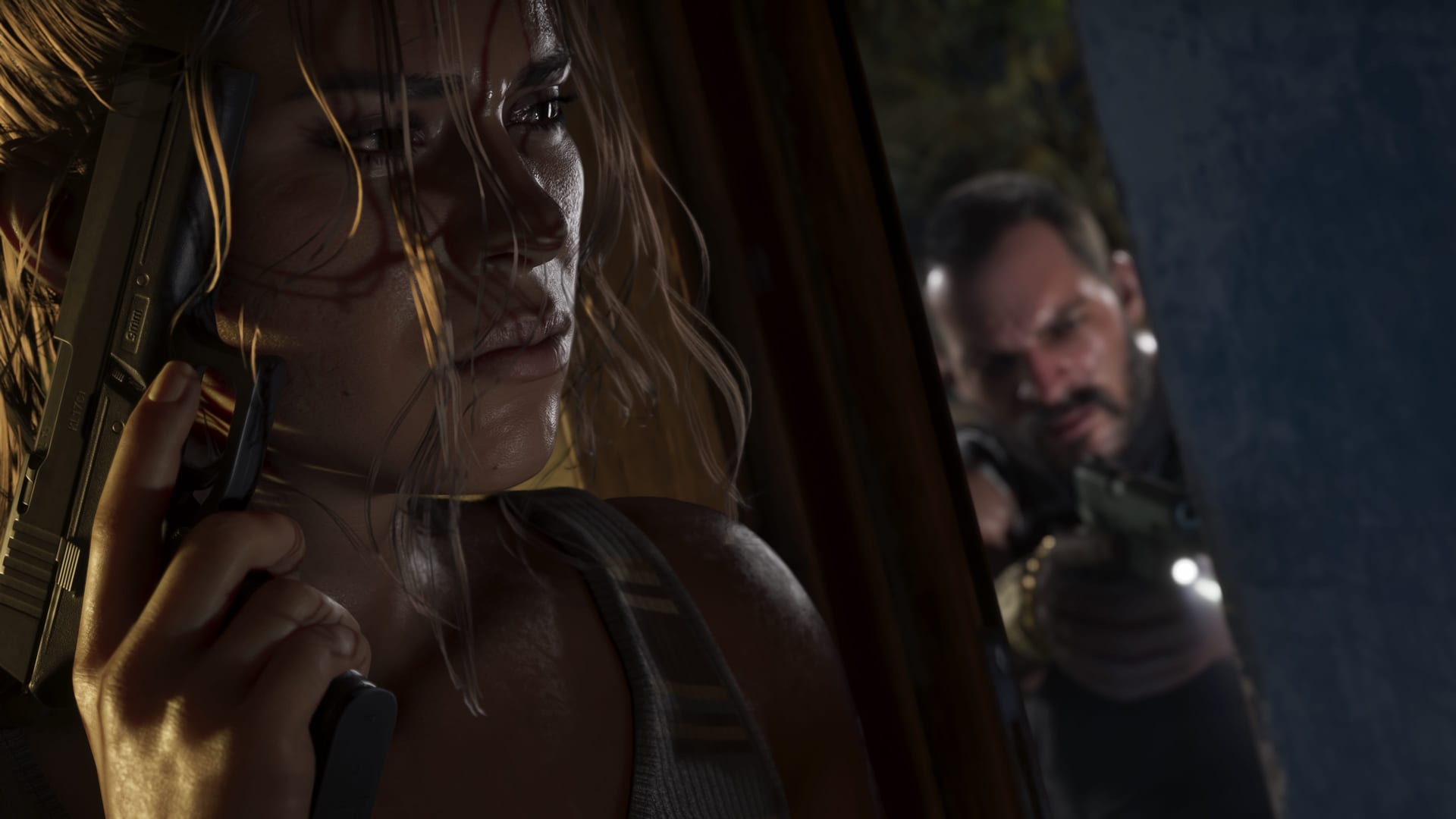
GTA 6 Wanted Level System Explained: Six Stars, Witnesses, and How Police Identify You
Six wanted stars are back, but the real change is police hunting a description of you. Every star colour, HUD icon, and evasion tactic the Extended Look showed.
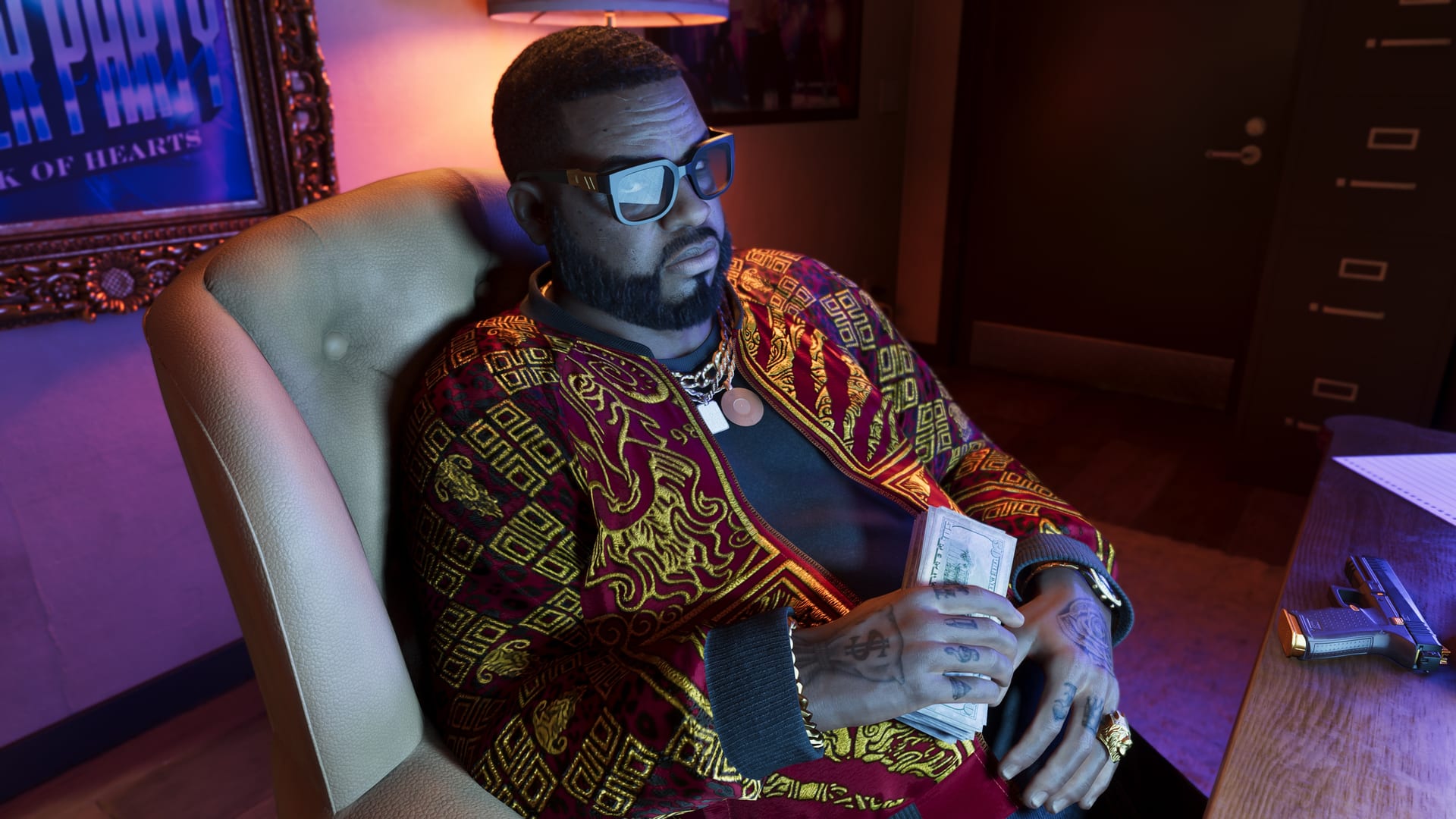
GTA 6 Extended Look: Everything Rockstar Confirmed
Rockstar's Extended Look landed August 27, 2026. Every confirmed system: six-star wanted levels, character switching, body sim, and more.
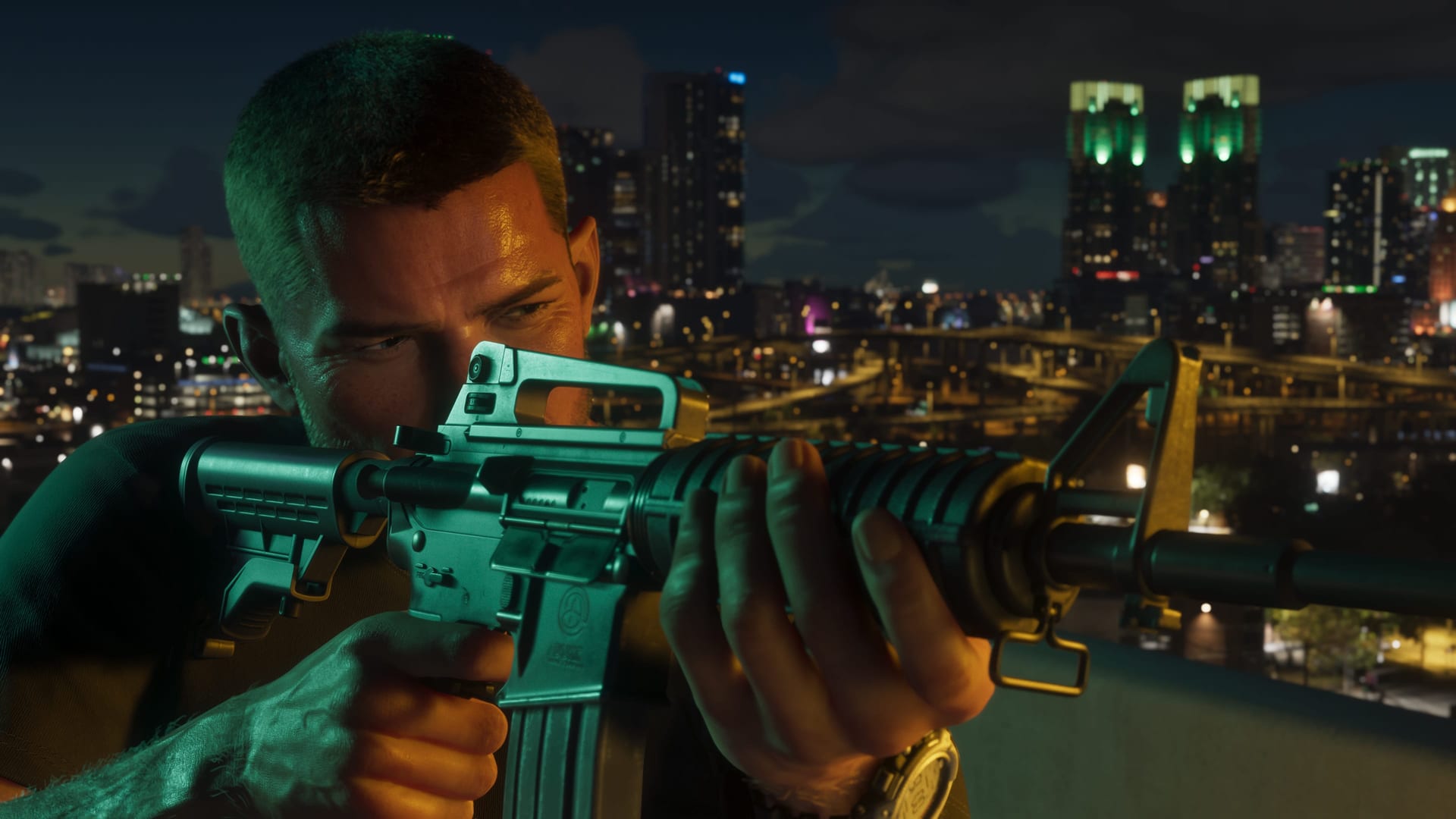
GTA 6 Gameplay Features: Confirmed Mechanics vs Leaked Retail-Listing Claims
Scan GTA 6 gameplay features by status: seven confirmed mechanics vs seven credible-but-unconfirmed retail-listing claims, plus fake-footage warnings.
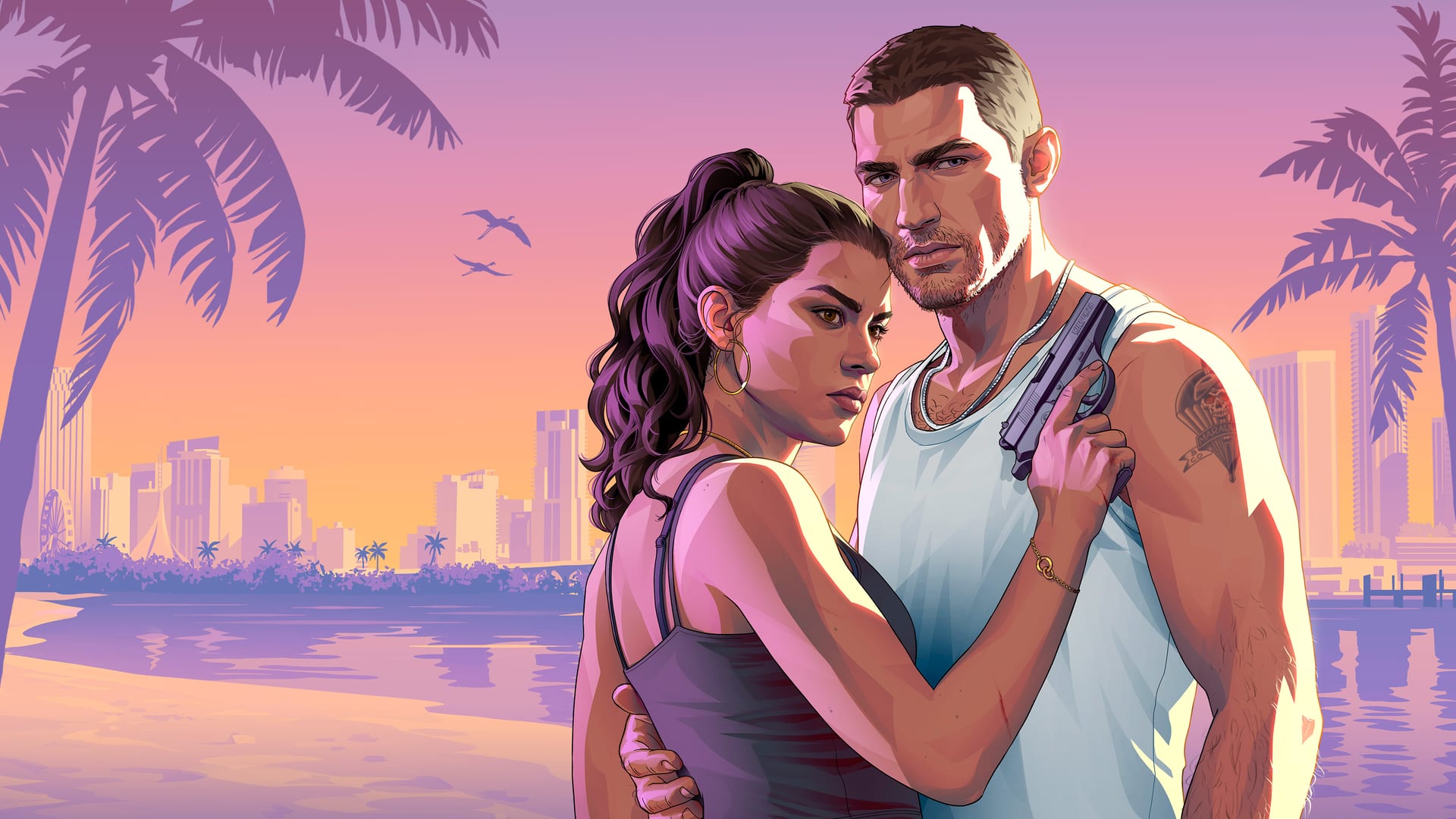
GTA 6 Characters: Jason and Lucia, Everything Official
Everything Rockstar has confirmed about the two leads, their partnership, and how the dual-protagonist structure works.