
What Rockstar actually said
Official. On August 27, 2026, Rockstar published Grand Theft Auto VI: An Extended Look and, in parallel, gave IGN a hands-off demo and interview at Rockstar North. The Criminal Profile came out of that interview rather than out of the video — it is a system named and described by a developer on the record, which is why it sits in the Official tier here.
Rob Nelson, co-studio head at Rockstar North, framed it around intent. Missions and robberies are supposed to be violent; the game is not scolding you for doing the job. His wording to IGN: It is when you go beyond what is necessary on a consistent basis, or you do completely unnecessary stuff consistently, that you may start to sway your criminal profile in a certain direction.
He also described the low-friction path, which is the more useful half for anyone planning how to play: If you hit and run, commit a crime and run, get into trouble and move on before the cops get there, and you do not start shooting people, do not start escalating — which you absolutely can do if you want to — but if you do not, you are generally going to be fine.
Two things follow from that. The profile is about patterns, not single incidents — the word "consistently" does a lot of work in both quotes. And getting away clean is neutral: a heist nobody witnessed is not a mark against you.
Grand Theft Auto VI: An Extended Look — the official presentation, published free on Rockstar Games' YouTube channel after its Netflix premiere.
What moves the profile
Rockstar has not published a scoring table, and we are not going to invent one. What follows is the direction of travel as described by Nelson and by outlets that sat through the same presentation — treat it as shape, not maths.
| Action | Effect on profile | Tier |
|---|---|---|
| Violence a mission or robbery requires | Neutral — explicitly "fair game" | Official |
| Committing a crime and leaving before it escalates | Neutral — "generally going to be fine" | Official |
| Consistently going further than the job needs | Negative | Official |
| Unprovoked killing sprees | Negative | Credible report |
| Crimes seen by witnesses or posted to in-game social media | Negative | Credible report |
| Small good deeds — binning litter, feeding animals | Positive | Credible report |
| Laying low for a stretch | Positive | Credible report |
The design intent reads clearly enough: it separates professional from sloppy. A player who plans, hits the target and disappears is playing the game the way the fiction wants; a player who empties a magazine into a food court on the way out is the one the system is built to notice. That is a meaningfully different axis from the wanted level, which only cares whether the police currently want you.
Two different things are being called "criminal profile"
This is worth untangling, because coverage has blurred them and readers keep arriving at the same confusion.
- The Criminal Profile (reputation). The long-term record of how brutally you operate. Rob Nelson's system, described to IGN. Persistent across the campaign.
- The police profile (description). The dossier the cops build during a specific pursuit — your face, clothing, vehicle, whether you were alone or as a pair, whether CCTV caught you. That is part of the reworked wanted system, and it resets when you break the chase.
They interact, but they are not the same meter. You can wreck your reputation and still evade a pursuit by changing clothes; you can be spotless and still be cornered by six stars. Our wanted level breakdown covers the second one icon by icon, and the body and wardrobe systems explain why a spare outfit in a car trunk is now a tactic.
NPCs that fight back
Official. The profile would be inert without a crowd capable of reacting, and that is the other half of what Nelson described. His summary of the old model: You were the only one with an invisible arsenal hidden away. Apart from the police, everyone would run in terror.
In GTA 6, NPCs have individual patience thresholds. Being rude to the wrong person can start a fight. Drawing a weapon might send one bystander running and make another square up. A brawl in the street pulls onlookers rather than clearing the block. Crucially, Nelson said de-escalation is a real option — you can walk a situation back down if you want to.
Credible report. Outlets who watched the presentation describe a restaurant hold-up that turns into a hostage scene where the room does not react as one unit: some people drop flat, some stay in their seats, reactions vary by individual. Rockstar has also said the game holds well over 600,000 animations, with NPCs individually art-directed rather than assembled from parts — the technical budget behind crowds that can respond in more than two ways.
The interaction menu: greet, taunt, pet, study
Credible report. The mechanism for all of this is a contextual interaction menu, driven by what you are holding and how tense the moment is.
- Weapon holstered, calm situation — target a person and you get options along the lines of Greet or Taunt.
- Tense situation — the options shift to Defuse or Provoke. This is the de-escalation Nelson referred to, surfaced as an actual button rather than just walking away.
- Dogs and animals — Pet, Scold or Study. Jason petting a dog appears early in the presentation. It is the first mainline GTA to let you do it.
- People you are bothering — follow someone too closely, or stand and listen to a conversation too long, and they can turn round and confront you for it.
Analysis. The Study option is the one nobody can explain yet. Several outlets have guessed it feeds a compendium of Leonida wildlife, in the manner of Red Dead Redemption 2's animal journal. That is a reasonable guess and nothing more — Rockstar has not said what Study records or whether it records anything. We are flagging it as an open question rather than repeating it as a feature.
What is not in doubt is the design pattern: the same menu that lets you pet a dog is the menu that lets you provoke a man into swinging at you, and both feed the same reactive world. Combat is no longer the only verb available when a stranger gets in your face — see the combat and gunplay breakdown for what happens when you choose the other option.
Witnesses with phones
Credible report. GTA 6 puts social media inside the world rather than only on your phone. NPCs livestream. During one sequence — Lucia driving off with a hostage in the trunk — an optional livestream feed can be brought up mid-chase, complete with viewer comments scrolling over the action. In a street-performance scene, a woman doing a stunt recognises Jason and Lucia when they approach, with the same livestream interface overlaid.
The consequential part is that this is reported to feed back into the profile. A crime nobody records is different from a crime that ends up on a feed. It gives the system a diegetic explanation for how a whole state comes to know who you are, and it makes the presence of a phone-holding bystander a thing worth reacting to rather than set dressing.
Set against the wanted system, the logic lines up: police in GTA 6 do not automatically know who did it. Somebody has to see it, record it, or trigger an alarm. Social media is simply a third way for that information to travel.
Criminal Profile vs Red Dead 2 honor
| Red Dead 2 honor | GTA 6 Criminal Profile | |
|---|---|---|
| Axis measured | Good versus bad | Professional versus sloppy |
| Story violence counts? | Often yes | No — explicitly fair game |
| Visible meter | Yes, on-screen | Unconfirmed |
| Witnesses matter | Yes | Yes, plus in-game social media |
| Small good deeds count | Yes — greetings, donations | Reported — binning litter, feeding animals |
| Applies to | One protagonist | Jason and Lucia |
| Affects ending | Yes | Unconfirmed |
The honest comparison: GTA 6's version is less moralistic. Red Dead 2 asked whether Arthur was a good man. This asks whether Jason and Lucia are good at their jobs — which suits a crime story where neither protagonist is pretending to be anything else, and avoids the odd friction of a game rewarding you for being gentle in between mandatory massacres. Whether it applies to the pair jointly or tracks each of them separately has not been stated, which matters given how much the campaign expects you to be switching between them.
What is still unconfirmed
- The shattering badge. The most-repeated claim online is that the profile is shown as a badge that cracks at low standing and can never be repaired for the rest of the playthrough. We traced this to a YouTube creator's summary of the presentation, not to Rockstar and not to the footage — unverified. A permanent, unrecoverable state would be a major design decision and Rockstar has not described one.
- Meter or hidden stat. Some reports describe it as a hidden value visible in the character menu rather than an on-screen bar. Not confirmed either way.
- Effect on the story. Reports suggest consistent behaviour may touch how the narrative plays out. No Rockstar statement describes branching endings.
- Crime hotspots. Claims that returning to the scene of an earlier job without a disguise triggers instant recognition are circulating without a traceable source — unverified.
- Shared or separate. Whether Jason and Lucia carry one profile between them or one each.
- Any numbers. No thresholds, no rate of change, no scoring values exist publicly.
For everything else the presentation revealed, see the full Extended Look breakdown and our running confirmed vs unverified features tracker. With under three months to go before November 19, a fuller systems breakdown from Rockstar is still plausible.
Frequently asked questions
- What is the Criminal Profile in GTA 6?
- It is a system that tracks how Jason and Lucia carry out their crimes rather than how many they commit. Rockstar North co-studio head Rob Nelson described it to IGN alongside the August 2026 Extended Look: violence a mission requires is fair game, but consistently going further than necessary sways your profile in a direction. It is the closest thing GTA has had to Red Dead Redemption 2's honor system.
- Do NPCs fight back in GTA 6?
- Yes. Rob Nelson told IGN that GTA 6 NPCs may escalate instead of fleeing, contrasting it with older games where, in his words, apart from the police everyone would run in terror. Individual NPCs have different patience thresholds, so being rude might start a fight, drawing a weapon might scare one person and provoke another, and a street brawl can draw onlookers.
- Can you pet dogs in GTA 6?
- Yes. The Extended Look showed Jason approaching a dog and being offered Pet, Scold and Study options from the same contextual interaction menu used on people. It is the first mainline Grand Theft Auto to include it. What the Study option feeds into has not been explained by Rockstar.
- Can your Criminal Profile be permanently ruined in GTA 6?
- There is no Rockstar statement confirming that. A widely repeated claim describes a badge icon that shatters at low standing and cannot be repaired for the rest of the playthrough, but it traces to a YouTube creator summarising the presentation rather than to Rockstar or to the Extended Look footage. Treat permanence as unverified until Rockstar addresses it.
- Does the Criminal Profile change the GTA 6 ending?
- Unconfirmed. Rockstar has said consistent behaviour can affect how the world reacts to you, and outlets have reported it may touch how the narrative plays out, but no one at Rockstar has described branching endings tied to the profile. The only firmly reported consequence is that NPCs behave differently toward Jason and Lucia when standing is low.
Source note: Items labeled Official come from Rockstar North co-studio head Rob Nelson's on-record remarks to IGN, published alongside Grand Theft Auto VI: An Extended Look on August 27, 2026, and from the presentation itself. Items labeled Credible report are footage-level observations from named outlets covering the same demo — including GamesRadar+, Engadget, Insider Gaming and KeenGamer — cross-checked against each other. The shattering badge, crime hotspots and any scoring values are labeled unverified because we could not trace them to Rockstar or to the presentation. We do not link to leaked or stolen material — see our rumor policy.
More in Guides & Breakdowns
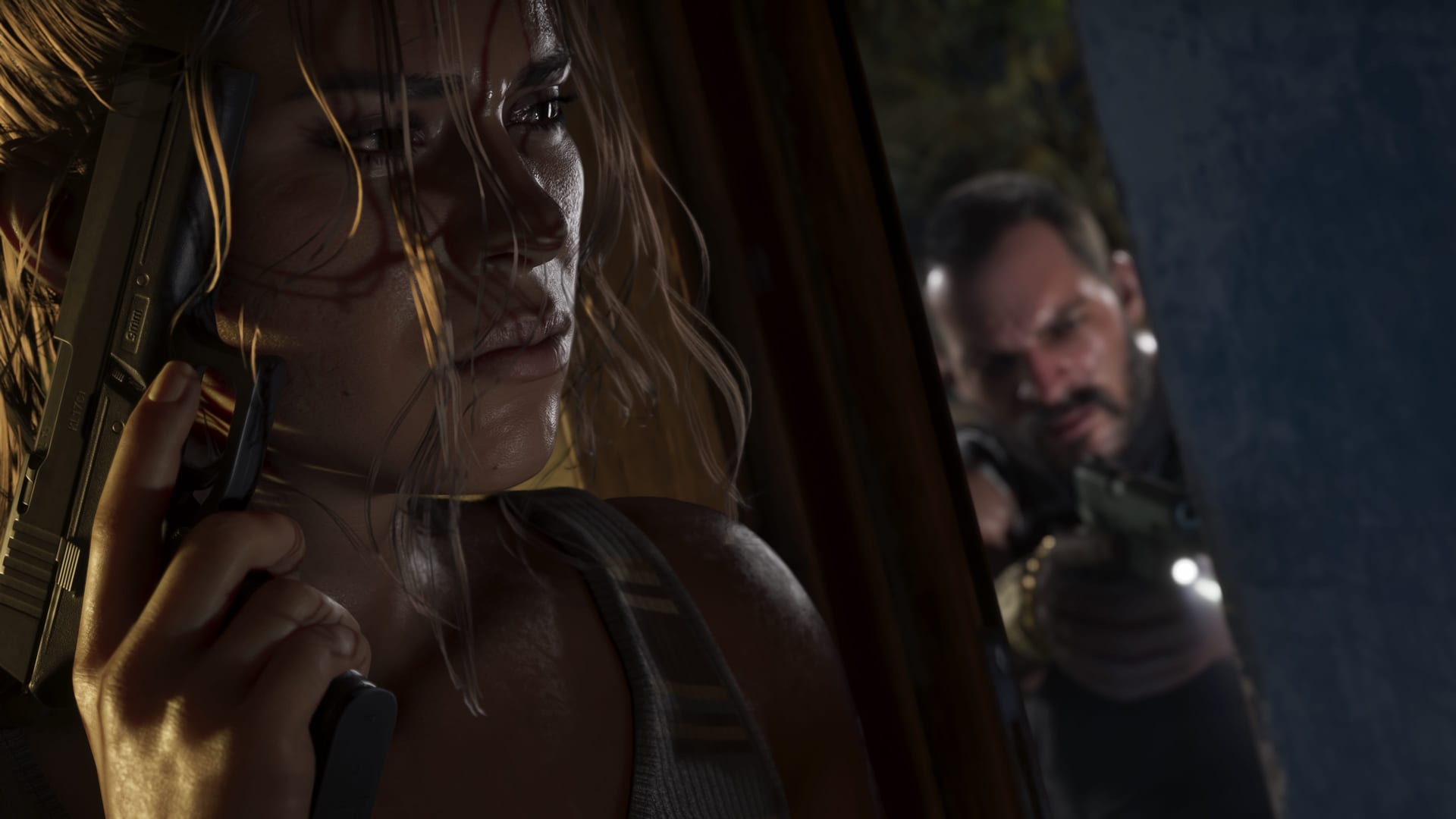
GTA 6 Wanted Level System Explained: Six Stars, Witnesses, and How Police Identify You
Six wanted stars are back, but the real change is police hunting a description of you. Every star colour, HUD icon, and evasion tactic the Extended Look showed.

GTA 6 Weight and Gym System Explained: Food, Muscle, Sleep, and the Body That Gives You Away
San Andreas' weight system is back and wider: food, gym work, missed sleep and multi-day benders all show on Jason and Lucia.
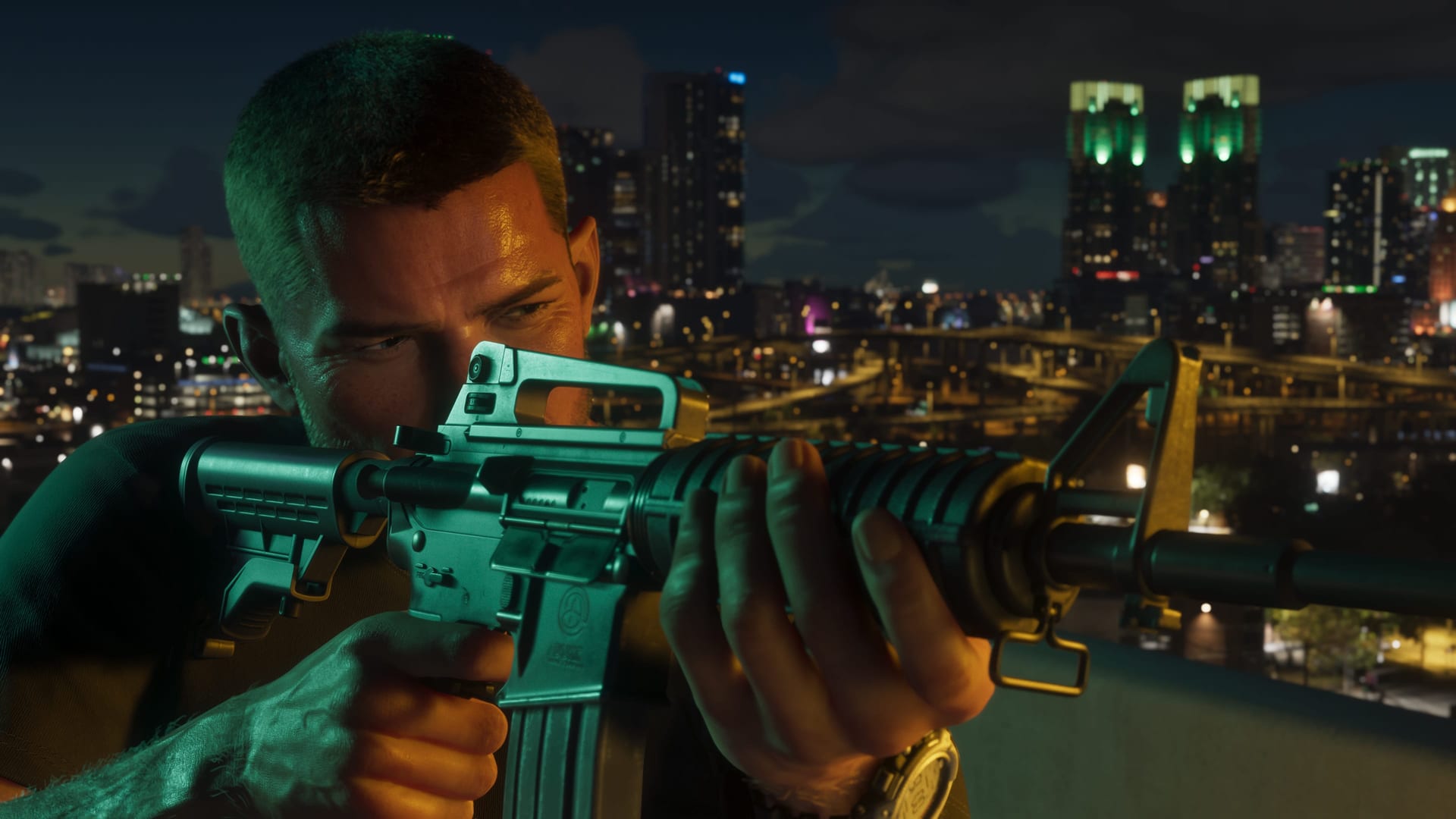
GTA 6 Combat and Gunplay Explained: The Focus Meter, Target Zones, and Car Chases
A Dead Eye-style focus meter with red lethal and yellow non-lethal target zones, rebuilt cover, tooled-up carjacking, and in-car police pursuits.
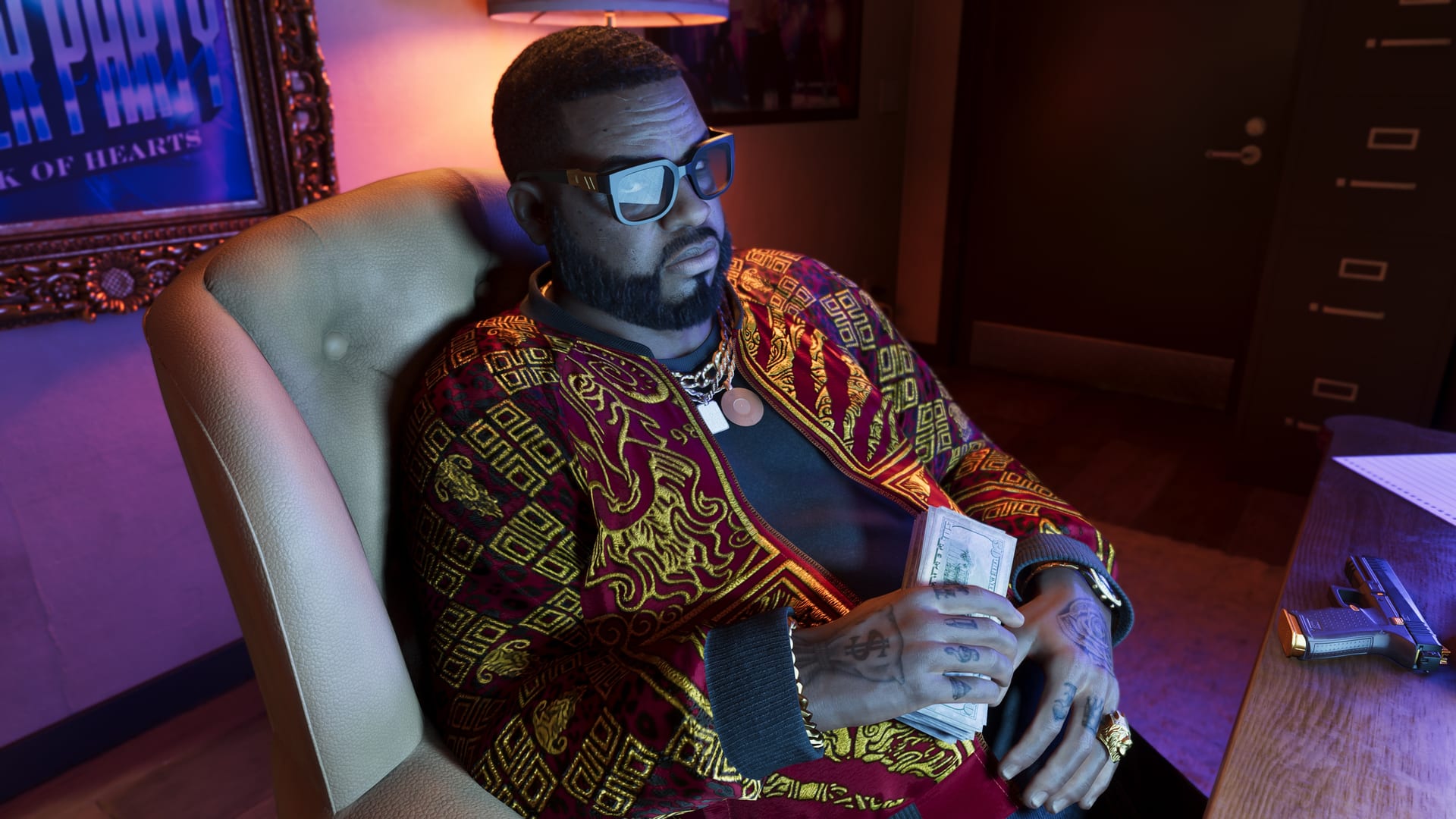
GTA 6 Extended Look: Everything Rockstar Confirmed
Rockstar's Extended Look landed August 27, 2026. Every confirmed system: six-star wanted levels, character switching, body sim, and more.